Face in the Rock Near Au Train: A Fading Carving and an Unfinished Story
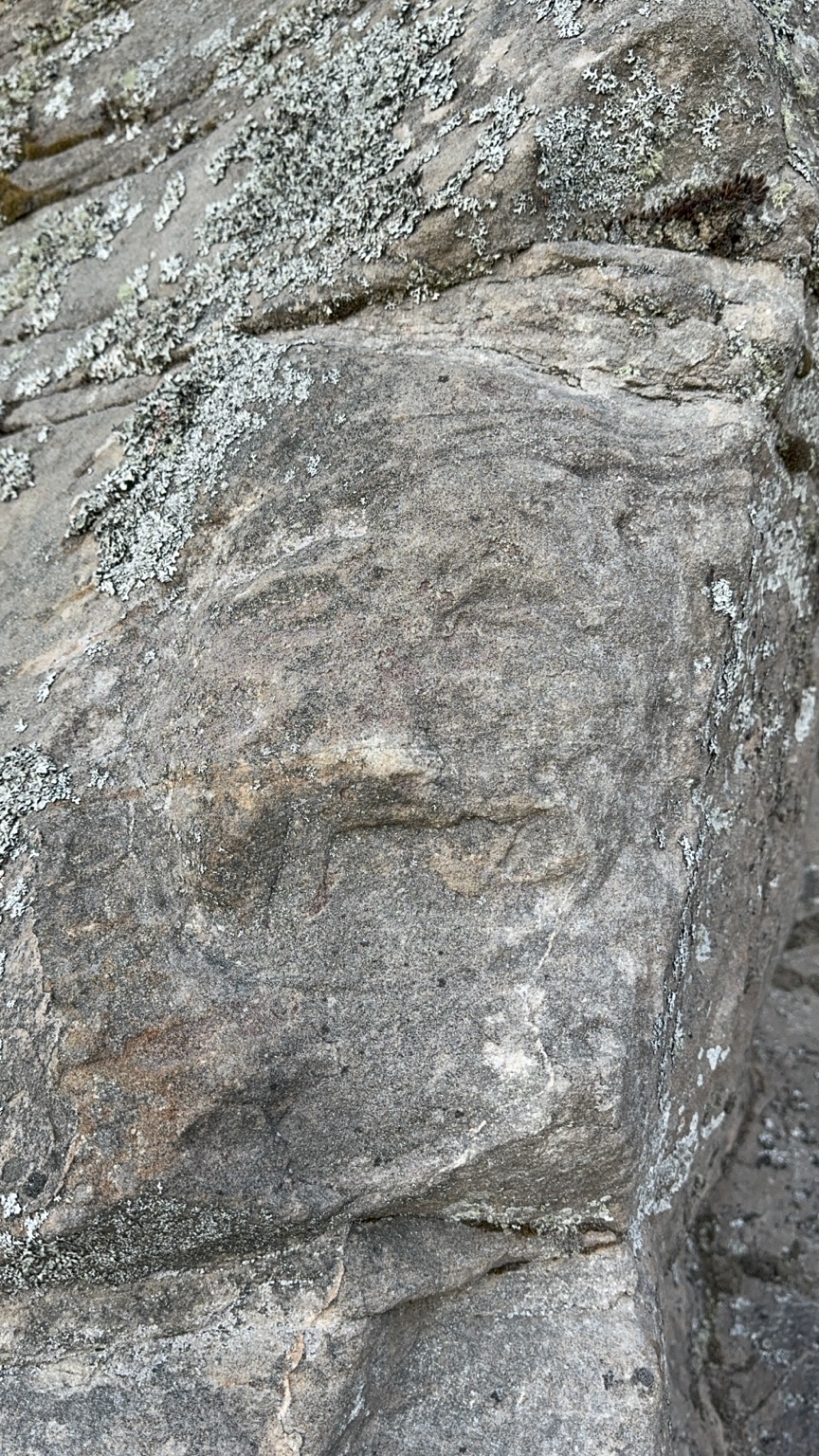
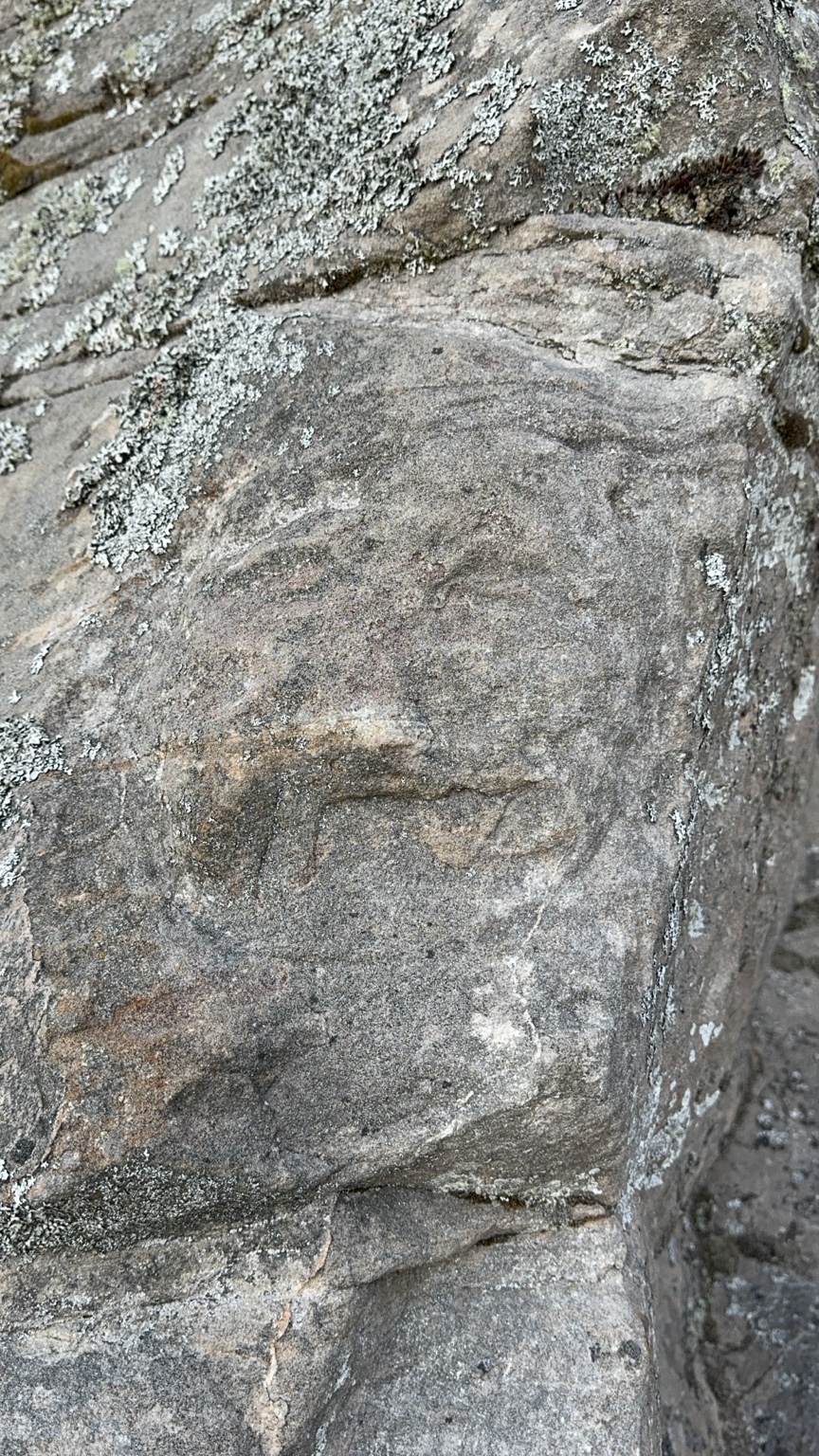
The sandstone has weathered heavily, and parts of the image are fading into the outcrop around it. Even so, the face was obvious to me. I could make out the eyes, nose, mouth, and parts of the outline surrounding them.
Face in the Rock Near Au Train: A Fading Carving and an Unfinished Story
I pulled off M-28, walked down to the Lake Superior beach, and followed the shoreline until I found the face carved into the rock.
The sandstone has weathered heavily, and parts of the image are fading into the outcrop around it. Even so, the face was obvious to me. I could make out the eyes, nose, mouth, and parts of the outline surrounding them.
At first, the Face in the Rock seems like a simple roadside discovery. Then you start looking into its story.
One part is documented in the journal of an 1820 government expedition. Another survives through local and Anishinaabe tradition. The two stories meet at this faint carving near Au Train, but they don’t fit together as neatly as the nearby interpretive sign might suggest.
That gap between documented history and tradition is what makes the Face in the Rock so interesting.
An Easy Stop Near Au Train
The Face in the Rock is at a state-owned Lake Superior roadside park about one mile east of Au Train on M-28. The location is commonly called H.J. Rathfoot Roadside Park, although current Michigan Department of Transportation material calls it Au Train Beach Roadside Park.
It’s approximately ten miles west of Munising and isn’t inside Pictured Rocks National Lakeshore.
The roadside pull-off and short walk across the beach make this an easy place to visit in favorable conditions. I parked, walked down to the sand, and followed the shoreline to the sandstone outcrop.
Scott Falls is directly across M-28, giving visitors another nearby stop. The waterfall and beach are on opposite sides of an active state highway, so anyone moving between them needs to take traffic seriously.
The Face in the Rock is a pretty neat little discovery, but finding it is only the beginning. Its story reaches back to an expedition through the Upper Great Lakes more than two centuries ago.
The Encounter Schoolcraft Recorded
In 1820, Michigan territorial governor Lewis Cass led a government expedition through the Upper Great Lakes and toward the Mississippi headwaters.
Henry Rowe Schoolcraft joined the expedition as its mineralogist and geologist. The larger group included officials, scientists, soldiers, Canadian voyageurs, Indigenous hunters, and interpreters.
After passing Pictured Rocks, the expedition camped at Grand Island. Schoolcraft recorded that people from a nearby Ojibwe community visited the camp and performed a dance.
He also described meeting a young warrior connected with a 13-man war party against the Sioux. According to Schoolcraft, the warriors had become surrounded and selected one man to return and carry news of what had happened.
That detail matters because later retellings sometimes describe him as the accidental sole survivor of a disaster. Schoolcraft’s account says he was chosen to return as a messenger. It also concerns a 13-man war party, not the destruction of the entire Grand Island community.
What the Journal Does Not Tell Us
Schoolcraft documented the Grand Island encounter, but his surviving published narrative doesn’t mention the Face in the Rock.
It doesn’t describe anyone creating a carving near Au Train. It doesn’t identify a carver, connect the shoreline image to the young warrior, or use the names Powers of the Air or Ogichidaa for him.
That doesn’t mean the traditional story should be dismissed. It means we need to present it honestly as tradition rather than documented fact.
Local and Anishinaabe tradition attributes the carving to an unidentified French-Canadian member of Cass’s expedition. According to that tradition, the face was carved as a tribute to the young warrior encountered at Grand Island. Later tradition identifies the warrior as Powers of the Air.
The interpretive sign also uses the word Ogichidaa. That Ojibwe word can mean a warrior, veteran, or ceremonial headman, but it hasn’t been established as this man’s personal name.
Other claims, including stories that he guided the expedition, became a Grand Island leader, or later lived in Indiantown, remain independently unverified.
What we know is that the expedition met the messenger and that a carved face survives near Au Train. What hasn’t been established is who carved it, exactly when it was made, or how the story of the warrior became attached to it.
The unanswered questions don’t weaken the story. They’re part of it.
Helping Visitors See a Fading Face
By the late twentieth century, the carving was already weathered and difficult for many visitors to recognize.
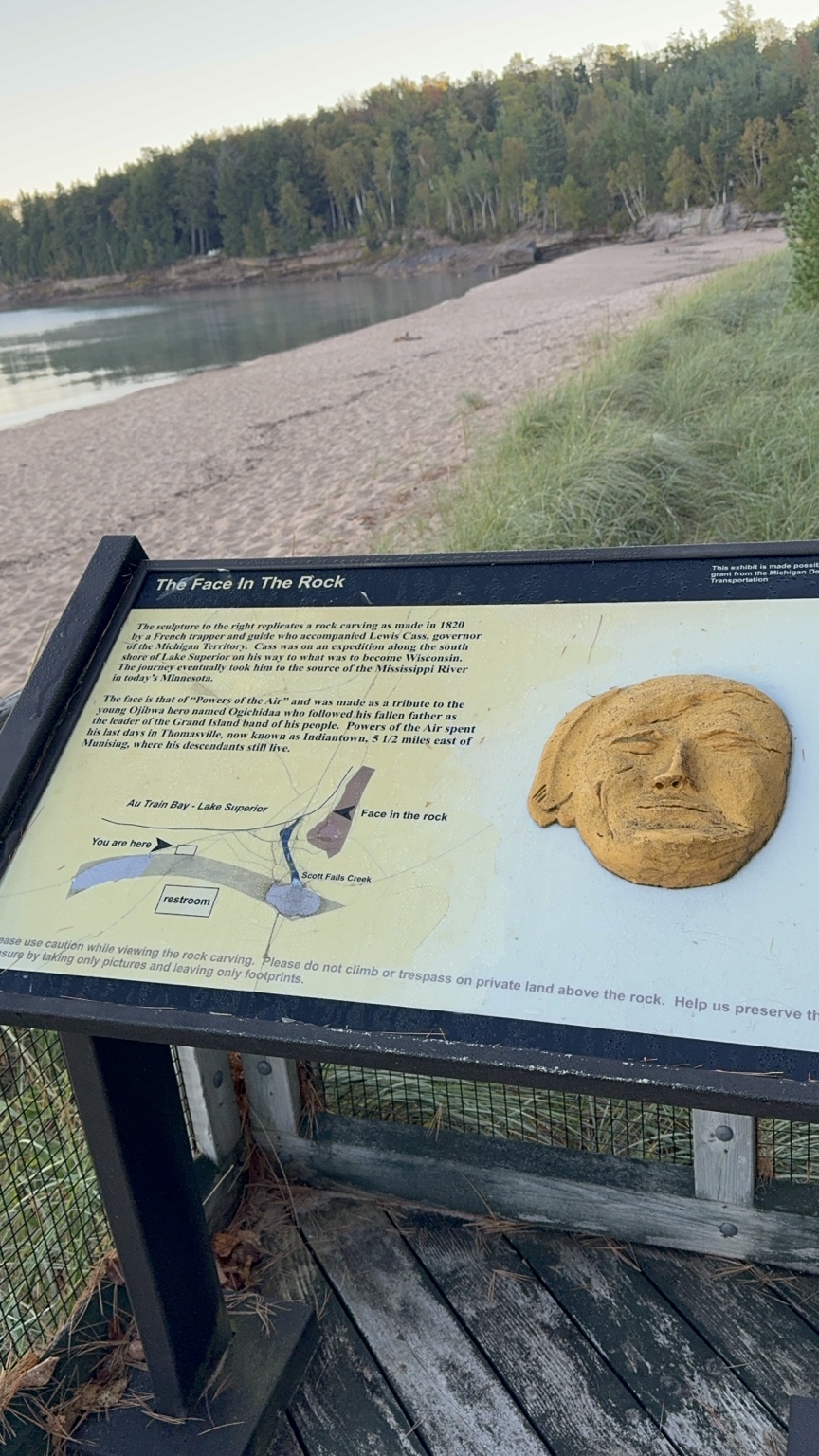
In 1996, local tribal elder Dolores Leveque began a project to increase public awareness of the carving and the connected Grand Island Anishinaabe history. Leveque and Pictured Rocks ranger Gregg Bruff worked on plans for a viewing deck and two interpretive exhibits with MDOT grant support.
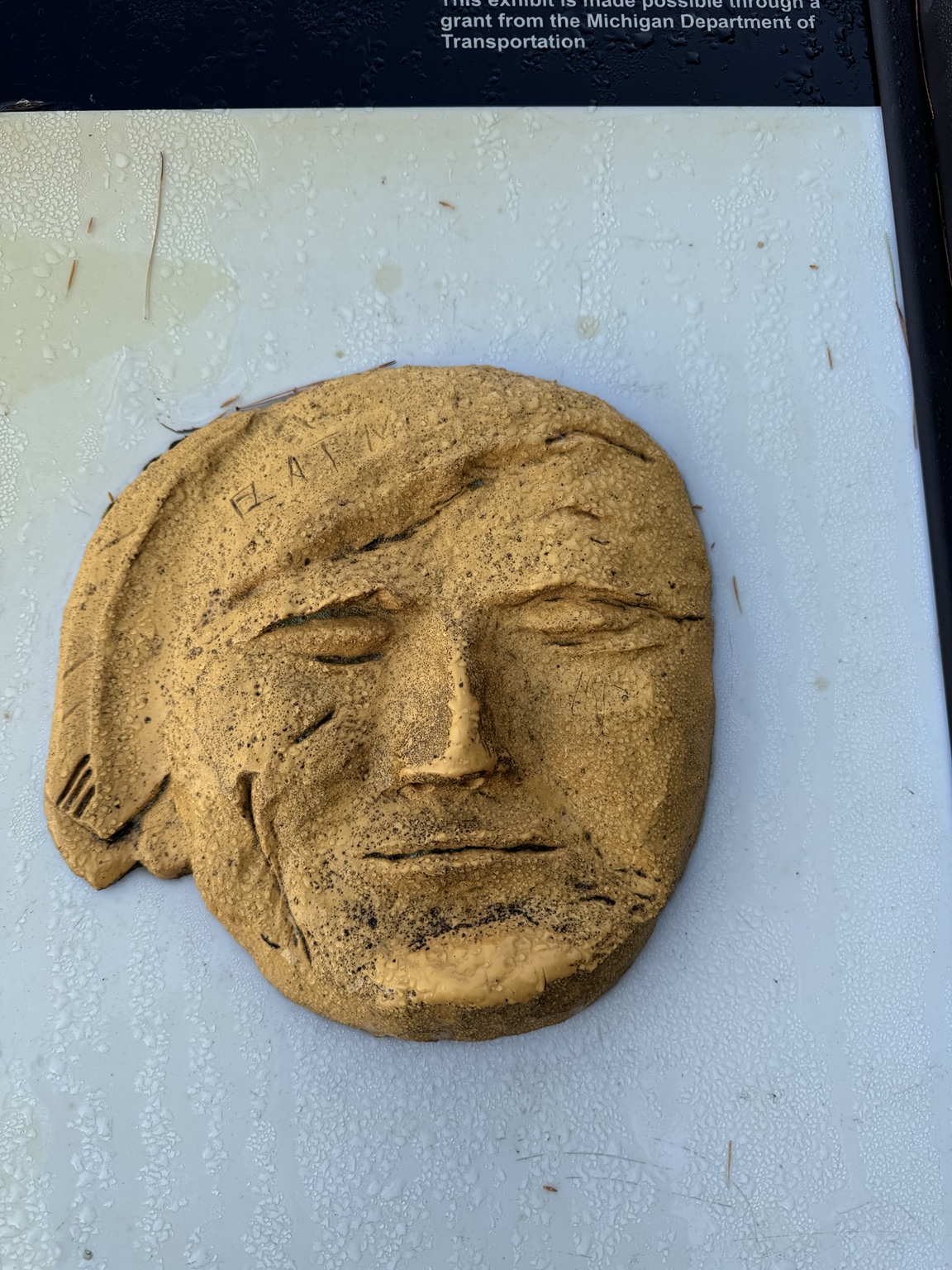
One exhibit included a three-dimensional replica intended to help visitors who couldn’t cross the shifting beach sand to reach the original. The deck and exhibits were planned for installation in 2002 and were later completed.
The replica also gives visitors a clearer idea of what to look for in the original carving. I could recognize the face when I reached it, but decades of weathering have made the image increasingly faint.
The replica now bears apparent modern scratches that aren’t part of the historical image. Neither the replica nor the original carving should be touched, scratched, climbed on, or marked.
Visiting the Face in the Rock
Visitors can view the interpretive exhibit before taking the short shoreline walk over the sand to the original carving.
The walk is generally easy in favorable conditions, but it crosses shifting beach sand rather than a developed accessible trail. The original carving shouldn’t be described as wheelchair accessible. The replica was created partly so visitors who couldn’t cross the sand could still experience the image.
Don’t climb the sandstone outcrop or trespass on the private property above it.
The roadside parking area operates seasonally and reportedly closes during late fall, winter, and early spring. MDOT temporarily closed the park during summer 2026 for toilet-building improvements, so older descriptions of the restroom facilities may no longer be accurate.
No entrance fee was identified during the fact-check, but visitors should confirm current park access and conditions shortly before traveling.
A Face Between History and Tradition
The Face in the Rock is easy to visit, but its story isn’t easy to settle.
There is documented history here. Lewis Cass led the expedition. Schoolcraft traveled with it. The group camped at Grand Island and met a young warrior selected to carry news home from a surrounded war party.
There is also a traditional history connecting that man with a face carved into the Lake Superior shoreline by an unidentified French-Canadian traveler.
What we don’t have is a contemporaneous record connecting those two stories.
The carving remains, although time and weather continue to soften its features. The exhibit and replica help keep the story visible, but they can’t answer every question.
Maybe that’s the most honest way to understand the Face in the Rock. It’s part documented encounter, part remembered tribute, and part genuine historical mystery, all waiting at the end of a short walk along Lake Superior.
More Photos
Comments (0)
No comments yet. Be the first to join the conversation.


Comments (0)
No comments yet. Be the first to join the conversation.
Log in to leave a comment, or register for an account.