The name may be informal, but once you’re surrounded by moss-covered boulders, exposed roots, cedar trees, narrow passages, and the Lake Huron shoreline, it makes sense. I’ve hiked it myself, and magical really is the best word I have for it.
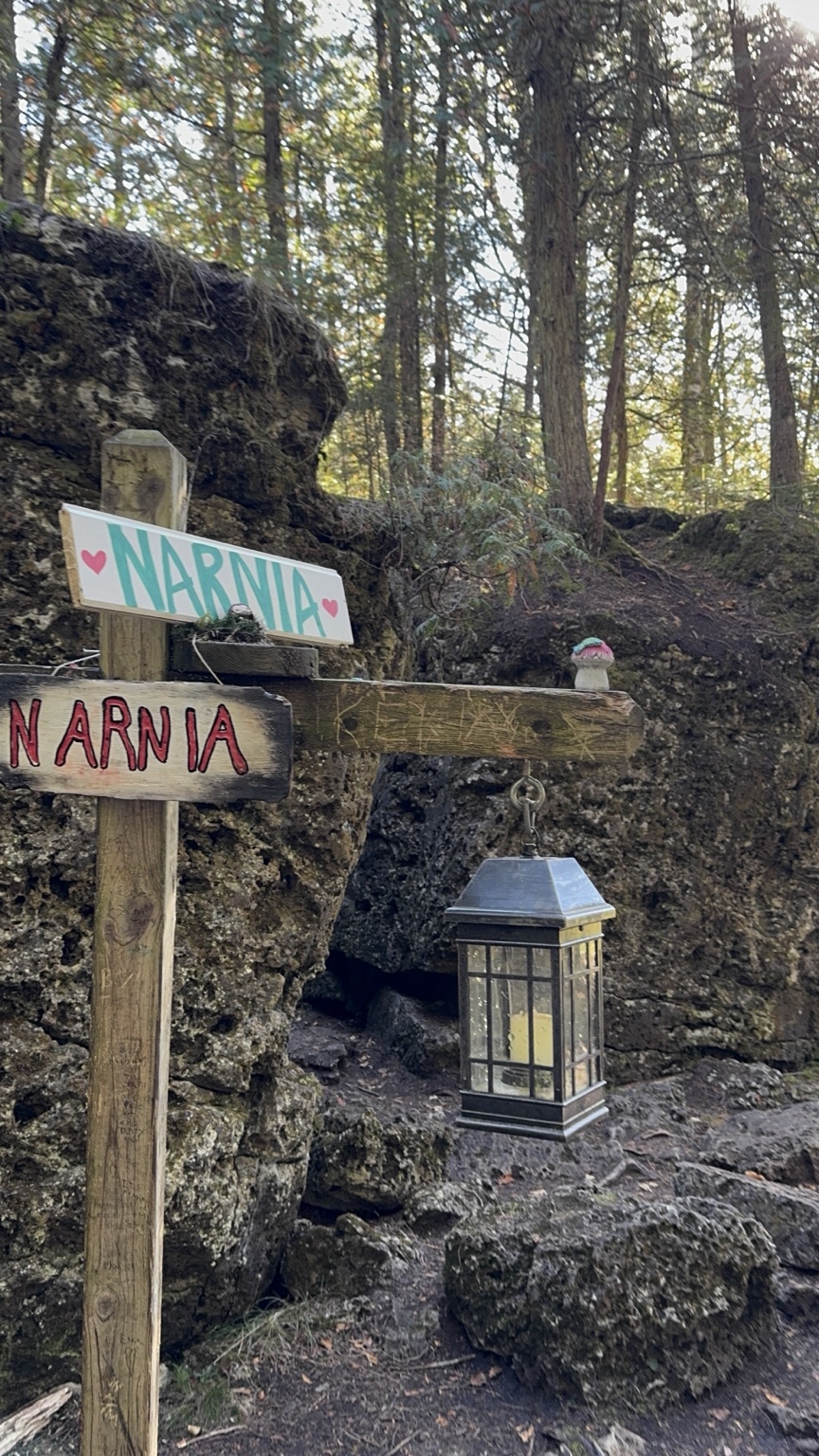
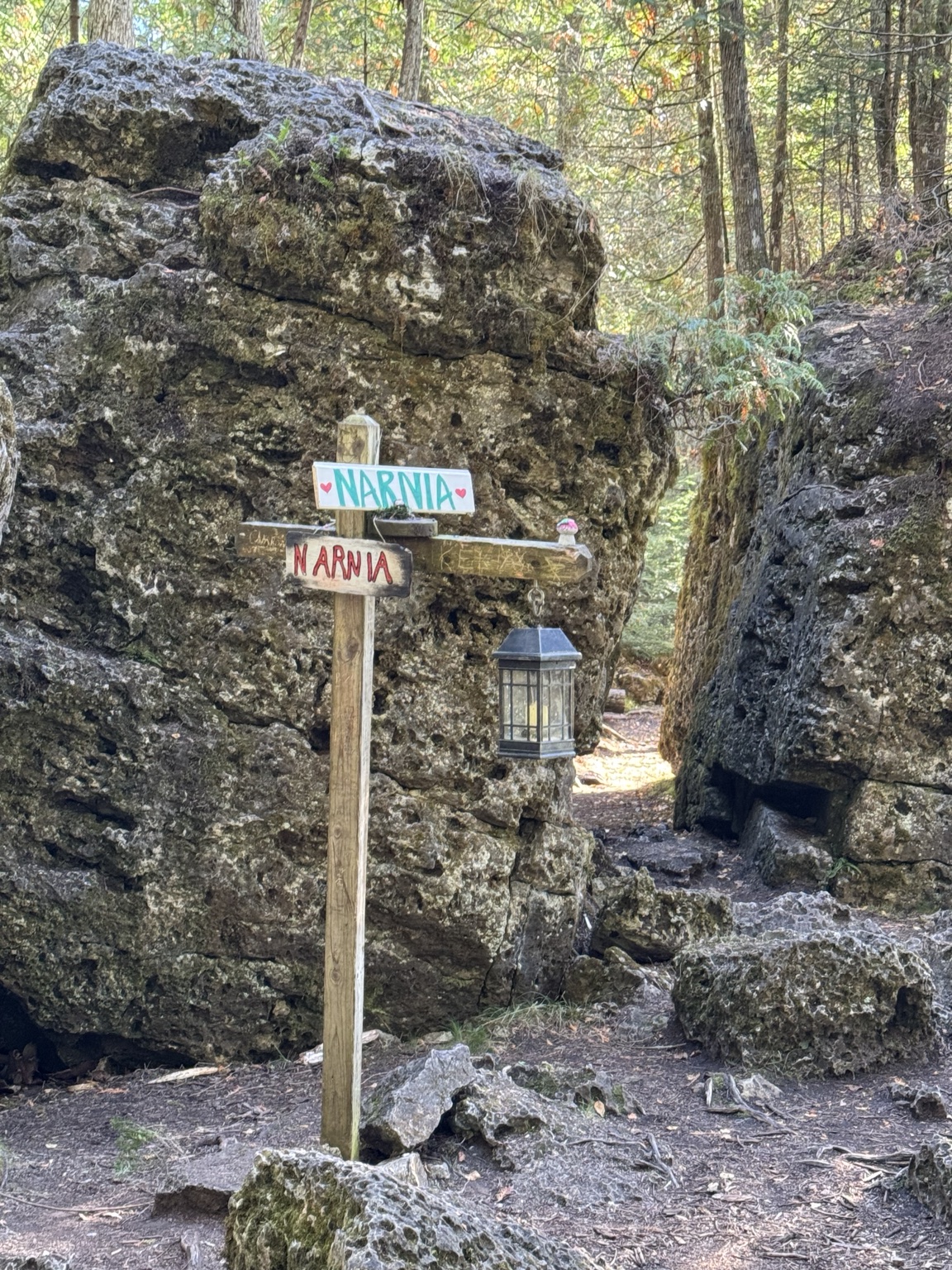
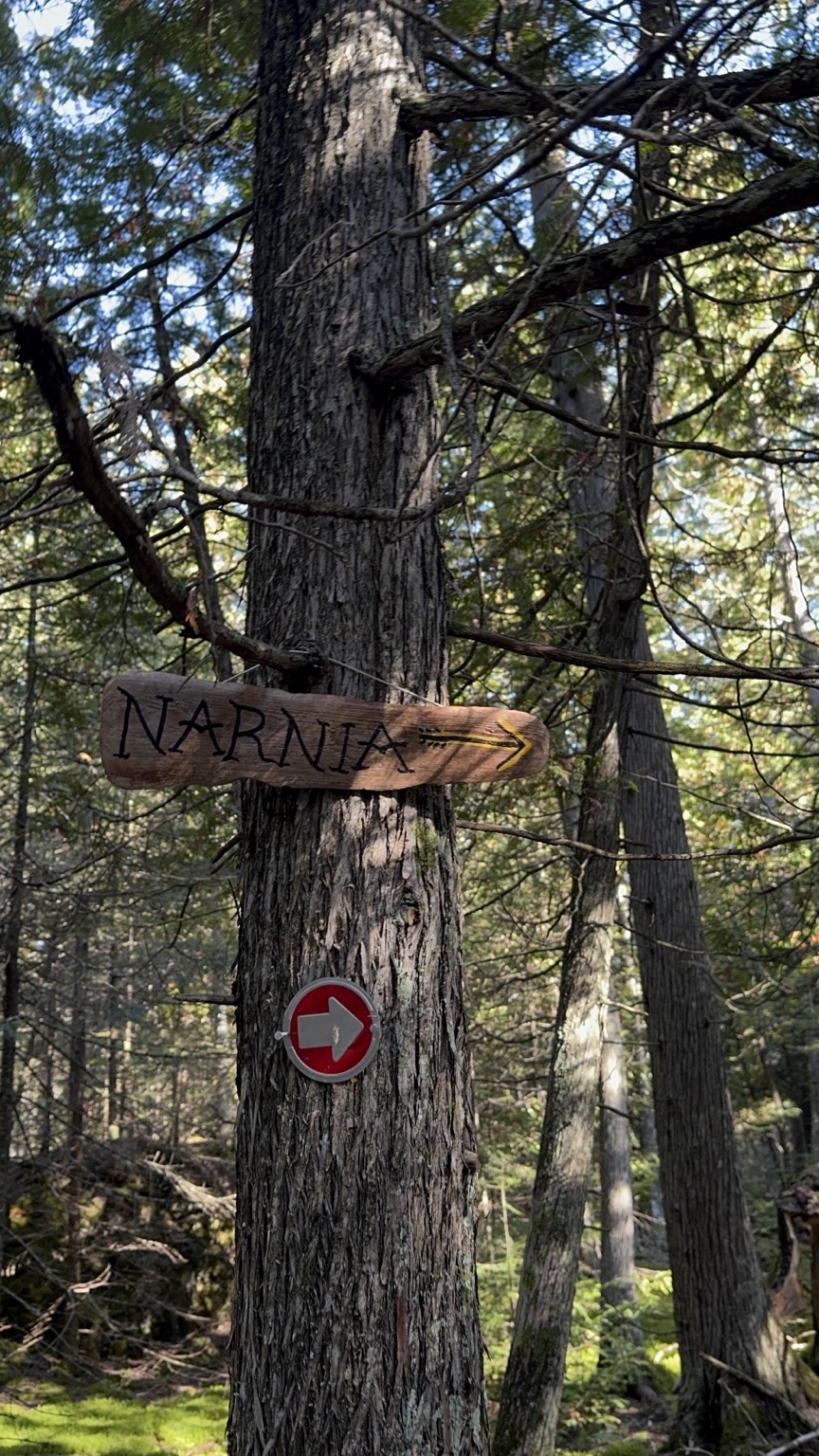
A handmade Narnia sign and a hanging lantern sit among the rocks and trees, pointing hikers deeper into a place that already feels a little removed from the ordinary world.
The name may be informal, but once you’re surrounded by moss-covered boulders, exposed roots, cedar trees, narrow passages, and the Lake Huron shoreline, it makes sense. I’ve hiked it myself, and magical really is the best word I have for it.
The hike isn’t especially steep, but it’s more challenging than a simple beginner nature walk. Rocks, roots, soft ground, and wet sections make you pay attention to every step. That unusual landscape is also easily damaged, so protecting the magic depends on visitors understanding where they’re walking and why staying on the trail matters.
Narnia Is a Nickname
What people call Narnia is actually a distinctive section of Bush Bay Trail near Port Dolomite, east of Cedarville. It isn’t a separate public park.
Bush Bay Trail passes through the 185-acre John Arthur Woollam Preserve, owned and managed by The Nature Conservancy, and continues across adjoining privately owned properties. The complete trail crosses three private properties.
Visitors have permission to use the designated trail, but that access doesn’t include the surrounding land. Staying on the marked route is both an access issue and a conservation issue.
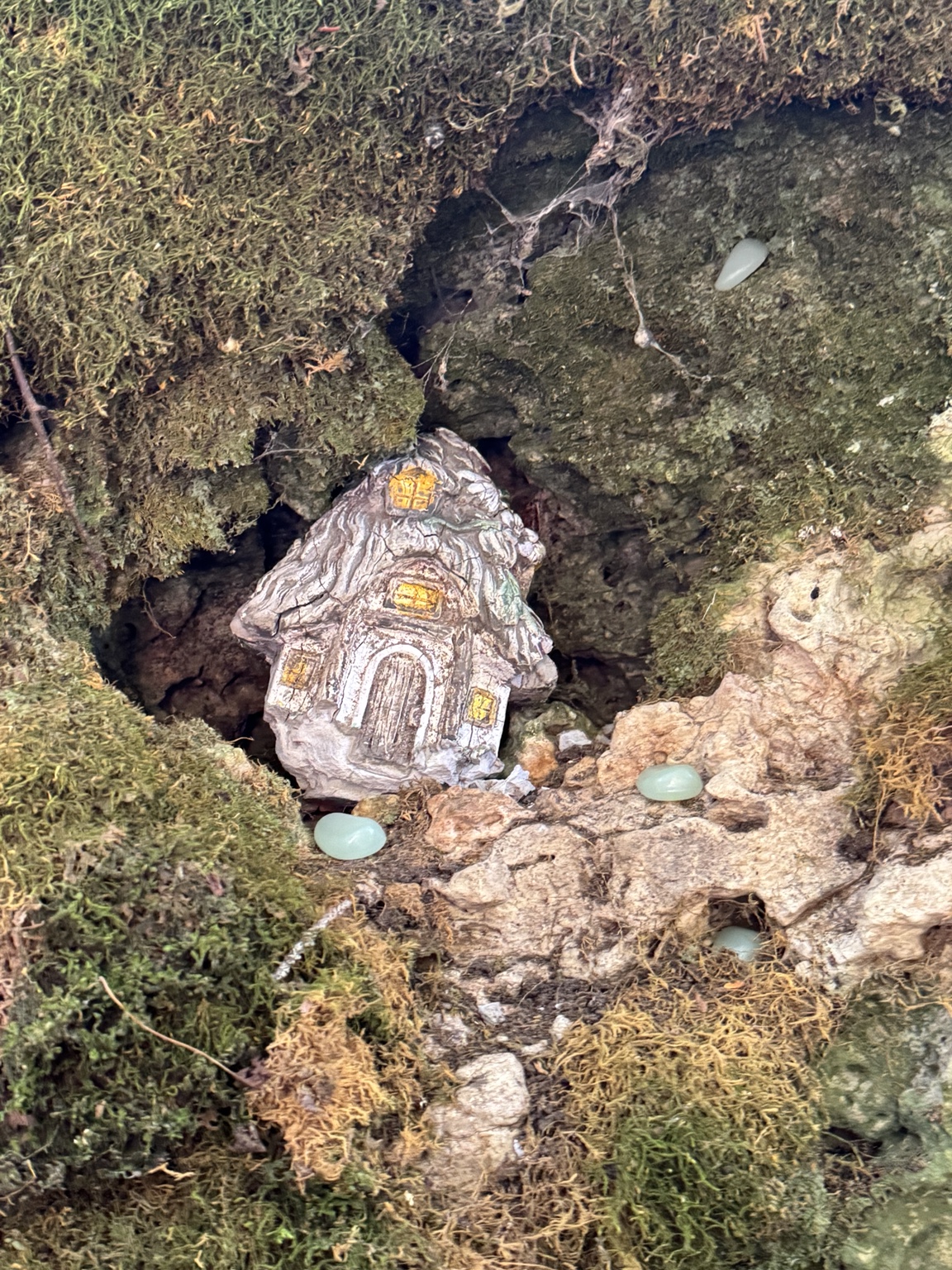
The origin of the Narnia nickname and the history of the lamppost haven’t been documented. There’s no confirmed record showing who installed it, when the name began, or which came first. The smaller signs and fairy-house-style decorations don’t have a verified history either, so they shouldn’t be treated as official or permanent parts of the preserve.
Whatever its origin, the Narnia name has definitely stuck.
Where the Magic Really Comes From
The handmade signs and lantern may catch your attention, but the real character of Narnia comes from the landscape.
The Woollam Preserve protects approximately 4,300 feet of Lake Huron shoreline, along with coastal wetlands, conifer forest, northern hardwoods, and rare-plant habitat. Large dolomite boulders sit beneath twisted roots and layers of moss. In some places, cedar trees seem to grow right over the rocks.
The preserve also contains alvar, a globally uncommon natural community that forms where only a thin layer of soil covers limestone or dolostone. It supports rare plants, while the shoreline and forest provide habitat for migratory birds.
You may not notice every plant or bird during one hike, but you can’t miss the boulders, roots, and moss. According to The Nature Conservancy, that moss can take decades to develop and helps create the conditions that allow cedars to grow over the rocks. Leaving the trail or climbing across the boulders can damage the very features people come here to see.
What the Hike Is Like
The official Woollam Preserve entrance is on the south side of M-134, 6.3 miles east of the M-134 and M-129 intersection in Cedarville. The main trailhead has six designated parking spaces and one portable toilet. The preserve is open year-round from sunrise to sunset.
The Nature Conservancy’s guide describes an approximately two-mile out-and-back hike, with options to continue. Other mileage figures may use a different entrance or turnaround point.
The terrain is mostly flat, but that doesn’t mean it’s smooth. Expect roots, rocks, soft ground, and seasonally wet sections. The Nature Conservancy rates most preserve trails as easy but classifies the Narnia portion as medium because of its soft and uneven footing.
Based on my visit, that feels about right. It’s a step above a basic beginner trail, but it isn’t a strenuous backcountry hike. Good footwear and a willingness to slow down make it much more enjoyable.
When More People Found Narnia
Earlier in the year, I kept hearing that Narnia was being overrun with visitors. That wasn’t quite what I experienced.
There were plenty of people during my visit, but it didn’t feel extremely overcrowded, and I didn’t see the trail covered in litter. That doesn’t mean the concerns were exaggerated. Conditions can vary, and the restoration work may already be helping.
The Nature Conservancy reports that visitation increased dramatically after 2020 and that social media attention surged during 2023 and 2024. As more people arrived, trails widened and visitors began creating or following informal routes. The conservancy documented trampled vegetation, compacted soil, erosion, wetland damage, and harm to the slow-growing moss.
A 2026 restoration project improved parking and added portable toilets, a temporary kiosk, signs, trail prompts, log lining, and brush to help define the intended route. By August, the conservancy reported early plant regrowth and encouraging litter conditions. Those were hopeful signs, but they weren’t proof that every problem had been solved.
Engineering plans for wetland boardwalks were also completed, and permit requests were submitted. Construction hadn’t been confirmed by September 20, 2026, so visitors should check for current updates, closures, or rerouting before making the trip.
A Little History and an Unsolved Story
The preserve was donated to The Nature Conservancy and dedicated in 2014 in recognition of Dr. John Woollam’s contributions to land conservation across Michigan. His name honors that broader work. It doesn’t mean he discovered Narnia or lived at the site.
There’s also an old cabin site near the shoreline, but its history and former occupant haven’t been verified. Stories connecting it to someone called Dr. Hadley remain a local mystery rather than established history.
That uncertainty belongs in Narnia’s story. The lamppost, the nickname, and the cabin all invite questions, but the available record doesn’t provide clear answers. There’s no need to turn those unknowns into facts. The mystery is interesting enough on its own.
## Keeping the Magic Intact
Current rules require visitors to remain on the established trail and not climb the rocks, trees, or shoreline. Visitors also shouldn’t add painted stones, signs, fairy houses, or other decorations.
This is private conservation land with authorized trail access. Don’t park on neighboring property or wander beyond the marked route.
Narnia isn’t a secret anymore, and pretending otherwise won’t protect it. It’s a genuinely cool hike, and during my visit, it felt busy without feeling overwhelmed. But moss that takes decades to grow and rare-plant habitat can be damaged by a few careless steps.
Narnia still feels magical. Keeping it that way means enjoying the trail without trying to leave our own mark on it.
More Photos
Comments (0)
No comments yet. Be the first to join the conversation.
Comments (0)
No comments yet. Be the first to join the conversation.
Log in to leave a comment, or register for an account.