HistoryHoly Angels Catholic Church on Sugar Island
What Remains of Payment: Holy Angels, an Old Cemetery and the Baraga Tree
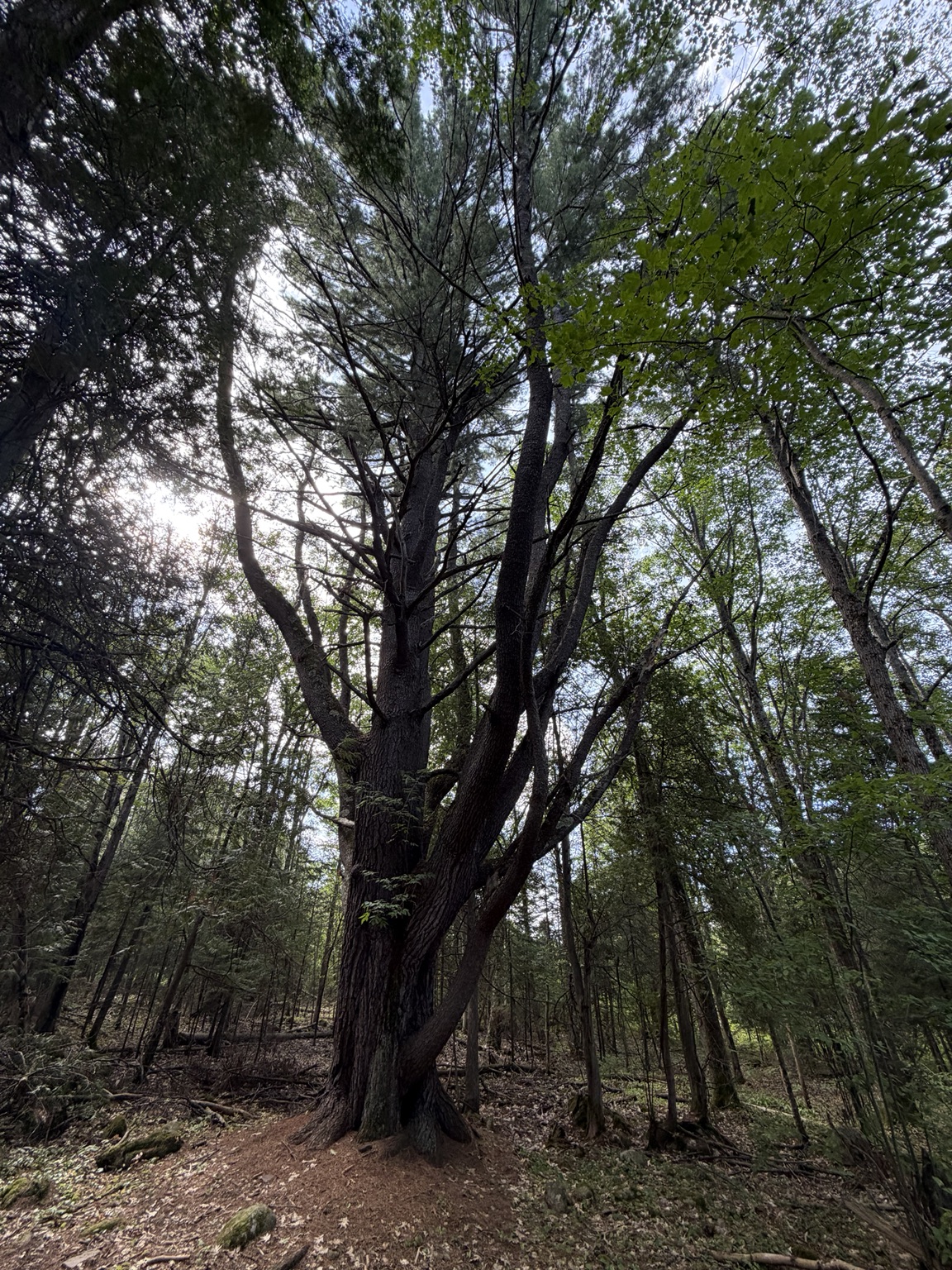
I came here to explore the church and the old cemetery in the woods behind it. What I wasn't expecting to find was another piece of the story nearby... a massive old tree known locally as the Baraga Tree.
Location: Holy Angels Catholic Church on Sugar Island
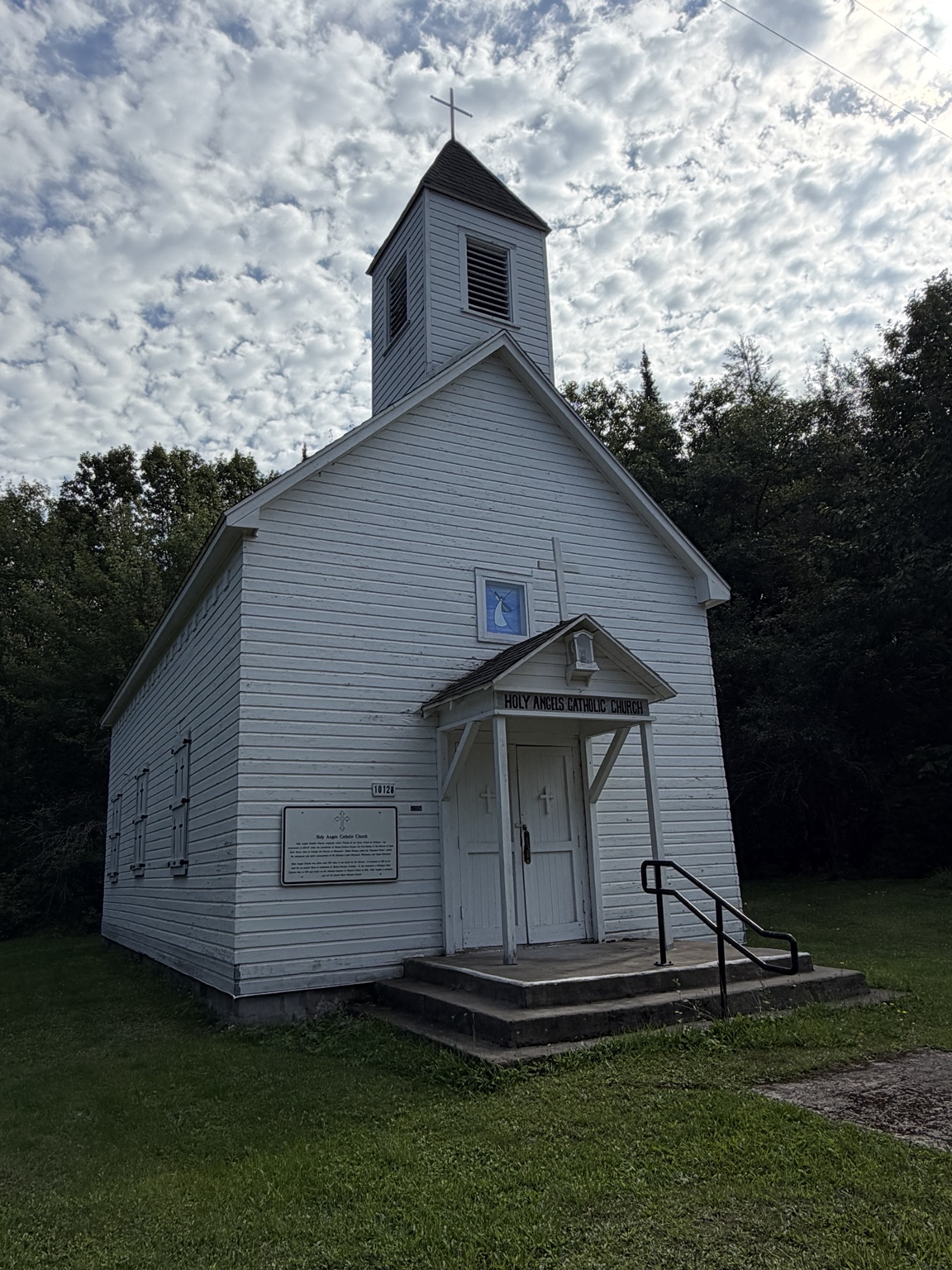
The little white church along North Shore Road doesn't look like the last piece of a vanished community.
But that's part of what makes Holy Angels Catholic Church on Sugar Island so interesting.
I came here to explore the church and the old cemetery in the woods behind it. What I wasn't expecting to find was another piece of the story nearby... a massive old tree known locally as the **Baraga Tree**.
I'd never heard of it before.
And considering Bishop Frederic Baraga's documented connection to this place, a tree carrying his name definitely caught my attention.
The church has a history we can trace.
The tree? That's another story.
The Last Piece of Payment
Long before this became a quiet stretch of Sugar Island, a small community known as Payment Settlement stood here.
Michael G. Payment established the settlement in the mid-1840s and operated a trading post, doing business with Ojibwe people in the area. Bishop Frederic Baraga's connection to Payment dates to about 1853.
In 1856, Baraga directed the effort to establish a church here. But there's an important distinction in the story.
**Baraga didn't build Holy Angels. Michael Payment did.**
Construction took place in 1856-57, and the church was historically known by the unusual name **Church of Our Saviour, Friend of Children**.
Over time, Payment faded away as a settlement. Historic accounts identify Holy Angels as its last surviving structure.
That changes the way I look at this little church.
It's not simply an old building sitting along a Sugar Island road. It's a piece of a community that otherwise disappeared.
The Tornado That Nearly Took It
Even the church's survival wasn't guaranteed.
In 1881, a tornado badly shook the building and tore down its steeple. A Jesuit account published several years later documented the damage.
The church was repaired with new foundations, exterior boarding, roof shingles, paint and a replacement steeple.
That's one of my favorite details about Holy Angels. Looking at the quiet wooden church today, it'd be easy to pass by without having any idea what it's survived.
Regular services continued until 1953, with summer use returning during the 1980s. Holy Angels became a Michigan State Historic Site in 1978 and was added to the National Register of Historic Places in 1982.
The Cemetery in the Woods
The story doesn't end at the church.
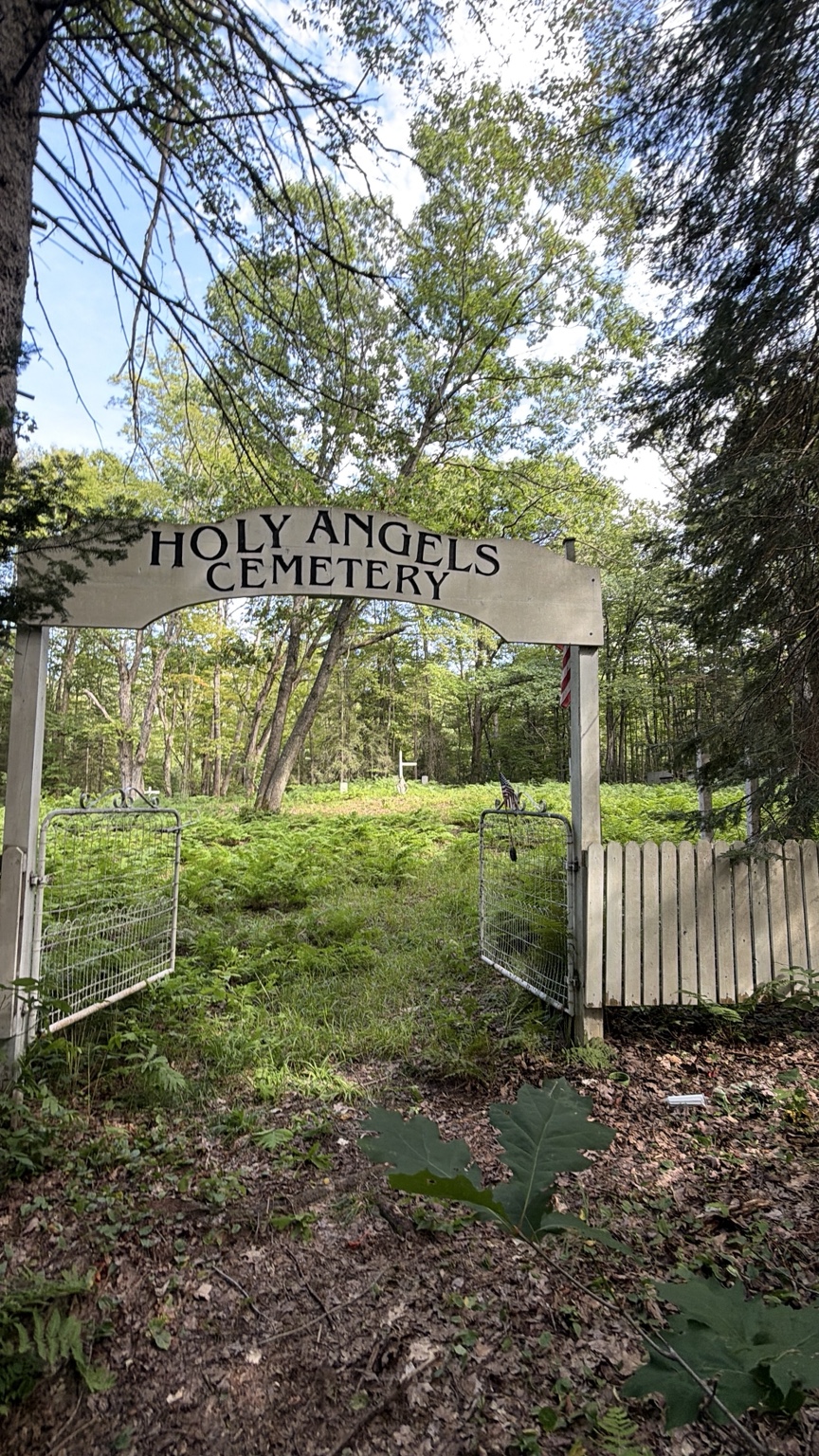
A wooded route climbs uphill toward an entrance marked simply:
**HOLY ANGELS CEMETERY**
The burial ground is also sometimes called Payment Cemetery locally, but Holy Angels Cemetery is the name posted at the entrance.
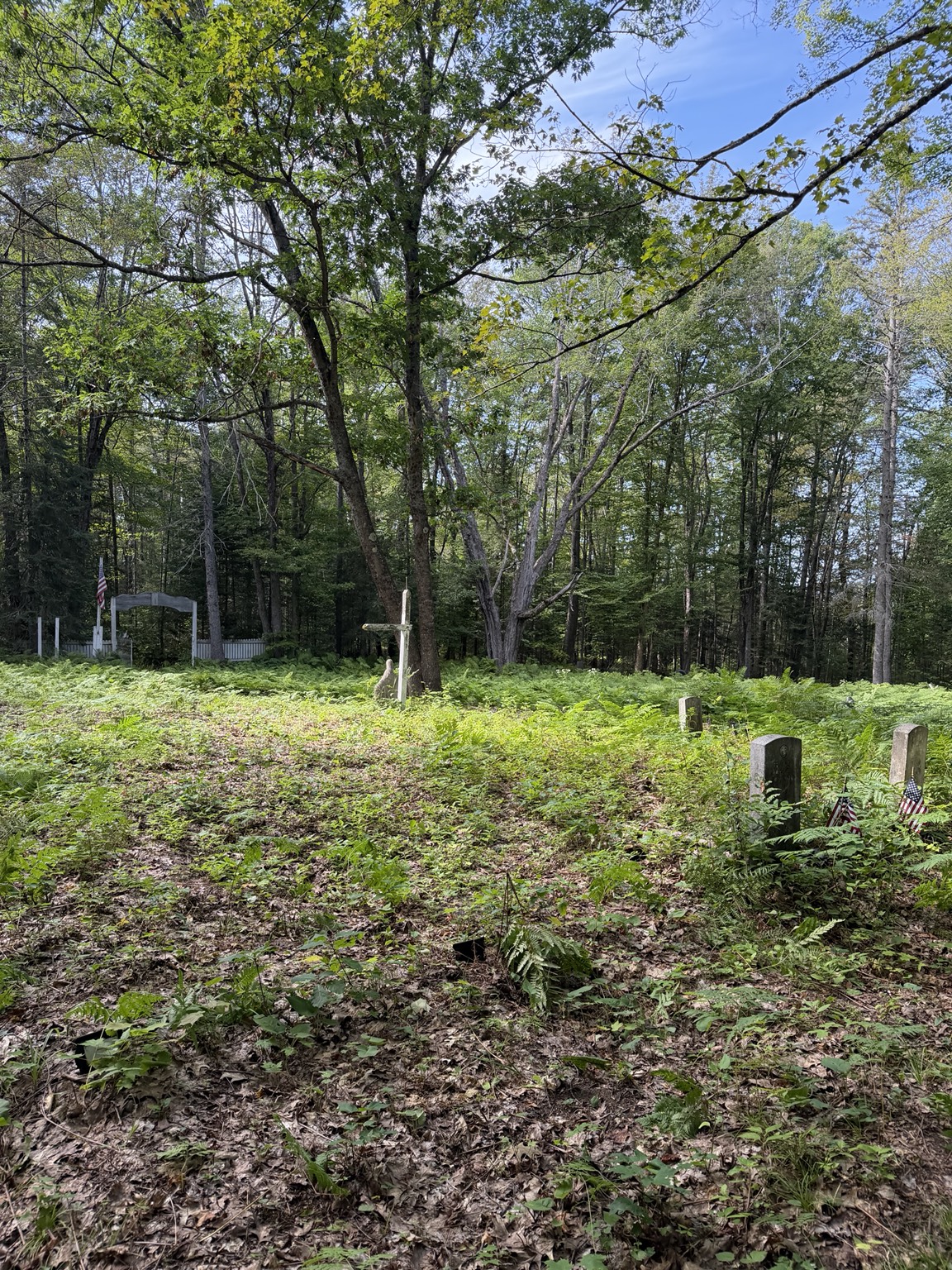
Once you're inside, it feels very different from a modern cemetery.
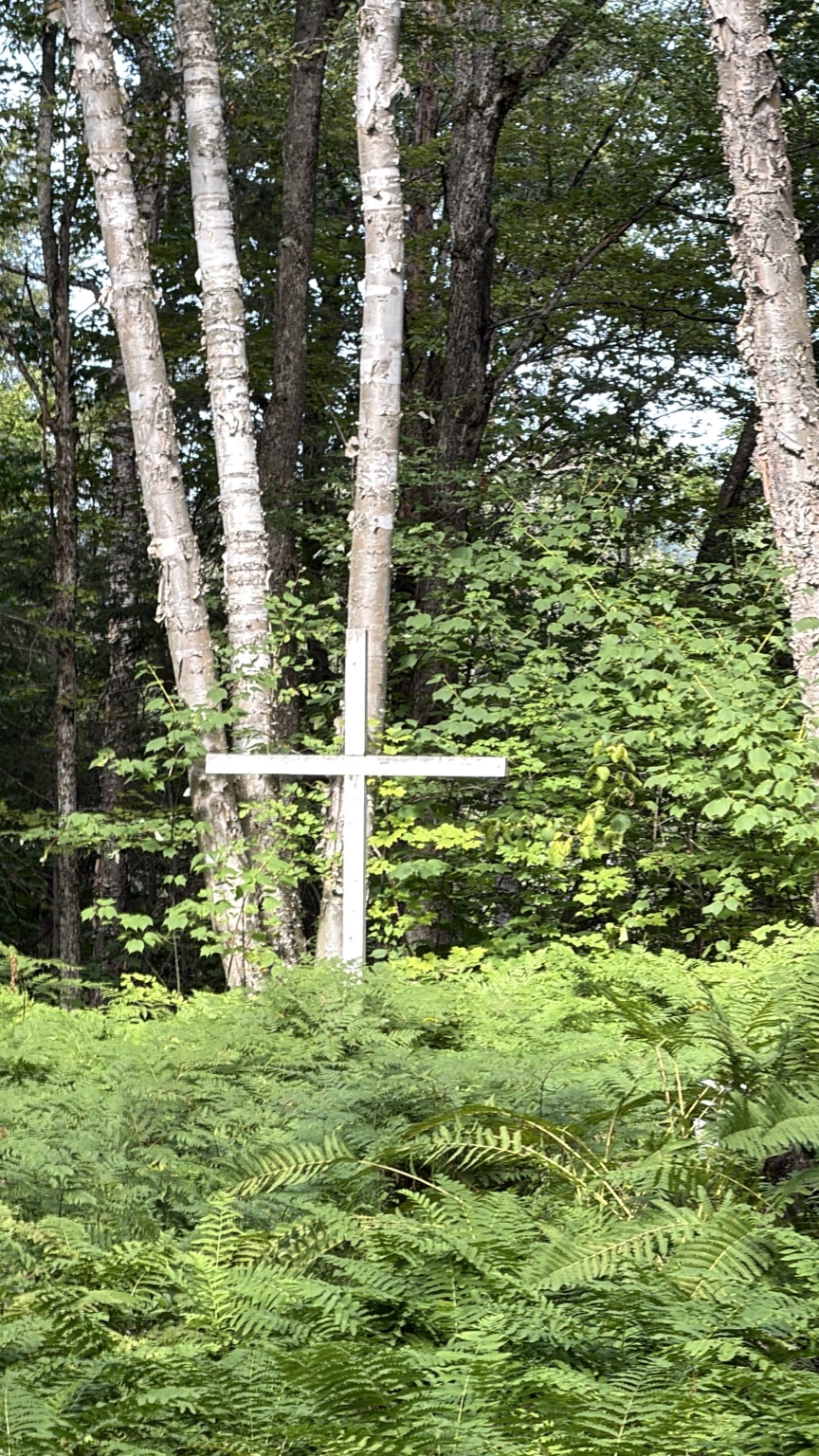
The woods surround the graves. Ferns grow throughout the grounds. Old stone markers rise from the vegetation, while simple wooden crosses stand among the trees.
Those crosses help tell another part of Payment's story. Northern Michigan University's Upper Peninsula Heritage Trail associates the historic stones and wooden crosses here with Payment's Anishinaabeg community.
The church may be the settlement's last surviving building, but the cemetery tells another side of the story... the people who were part of the community itself.
Then I Found the Baraga Tree
This was the surprise.
Nearby stands an enormous mature tree known locally as the **Baraga Tree**.
I hadn't come looking for it because I didn't even know it was there. But once I learned the name, I wanted to know why this particular tree was connected to Baraga.
There was a pretty good reason to wonder.
Baraga really was here. His presence at Payment is documented before Holy Angels was built, and he directed the effort that led to the church's construction.
But the connection between Baraga and this particular tree gets a whole lot murkier.
I haven't found reliable documentation explaining how it became known as the Baraga Tree. There's no solid evidence showing that Baraga preached beneath it, prayed there, rested there or had any other specific connection to it.
We don't even know whether the tree was standing during Baraga's time at Payment.
So that's about as far as we can safely take the story. A massive tree near this historic mission site is known locally as the Baraga Tree, but where that tradition came from remains unclear.
And I kind of like leaving it there.
Someone, sometime, started calling it the Baraga Tree.
**Why?**
For now, that's still part of the mystery.
Visiting Holy Angels
Holy Angels is along North Shore Road in the historic Payment area of Sugar Island. Reaching the island requires taking the ferry from Sault Ste. Marie, so check current ferry schedules, fares and service notices before heading over.
Don't count on being able to enter the church. Holy Angels doesn't maintain regular public opening hours, although it has occasionally opened for special events.
The cemetery is reached through the wooded area behind the church. Expect uneven natural ground rather than a manicured attraction.
Most importantly, remember that this is a burial ground, not an abandoned site. Leave markers, wooden crosses and vegetation around the graves alone, use established access routes and respect neighboring private property.
What Payment Left Behind
It's easy to stop here for the little white church.
But once you know what you're looking at, there's a lot more to the story.
A settlement grew here in the mid-1800s. Michael Payment lived and worked here. Frederic Baraga ministered here. A church was built, a community worshiped here, and people were laid to rest on the hill behind it.
Most of Payment disappeared.
The church didn't.
Neither did the cemetery.
And nearby, an enormous tree still carries Baraga's name for reasons the historical record hasn't explained.
I didn't even know the tree existed when I came here. Finding it turned out to be one of the most interesting parts of exploring the site.
Maybe someday an old record or a piece of local oral history will explain where the name came from.
Until then, I'm okay with the Baraga Tree staying a bit of a mystery... one unanswered question among the pieces of Payment that are still here.
More Photos
Keep Exploring
Find more waterfalls, fishing spots, hikes, and hidden places across the Upper Peninsula.